
France Paris Tuileri Garden statue Nessos abducted Dianella

France Paris Tuileri Garden statue Nessos abducted Dianella

Laurent Marquist (Laurent Marqueste) created the sculpture Nessus Enlevant Dejanire in 1892. The sculpture was placed in the Tuileri Garden in Paris in 1894. Nessus, the Centaur, attempted to take Deianeira, the wife of Hercules. The sculpture is lifelike, showing Nessos's strong centaur form and its dynamic posture, conveying the conflict and tension of the myth.
Statue "Law" at the Bopbon Palace Square in Paris, France"

Statue "Law" at the Bopbon Palace Square in Paris, France"

The sculpture, entitled "Law", was created by French sculptor Jean Jacques Feuchère (1807-1852). It is located in the Place du Palais-Bourbon in Paris, in front of the French National Assembly building (National Assembly). The statue is a symbolic depiction of the law: her right hand holds a scepter representing the hand of justice, and her left hand holds a stone slab engraved with the text of the law.
Statue of the Greek Bard in the Luxembourg Garden in Paris, France

Statue of the Greek Bard in the Luxembourg Garden in Paris, France

Located in the Luxembourg Garden in Paris, this statue was created by Charles-Arthur Bourgeois (Charles-Arthur Bourgeois) in 1868. It shows an ancient Greek poet reciting his lines. Details of the statue include the actor wearing a mask over his head (not a modern epidemic mask) and a sheepskin around his waist.
French 19th Century Statue of the Triumph of Salenos
French 19th Century Statue of the Triumph of Salenos

The sculpture, The Triumph of Cellenos, is the work of one of the most iconic French sculptors of the 19th century, Jules Dalou. In this scene of Dionysus carnival, you can see Salenos, the adoptive father of the Greek god Dionysus, riding drunk on a struggling donkey. The figures at the bottom of the sculpture, including a fanatical follower of the female god of wine (Minard), do their best to try to carry Salenos. Dallou did not want his works to be displayed in museums, so the group of sculptures has been housed in the Luxembourg Park in Paris since 1897.
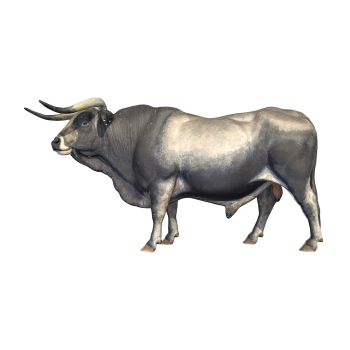
1889 Cast Iron Sculpture of a Male Buffalo

1889 Cast Iron Sculpture of a Male Buffalo

"On the Road" Plaster Statue

"On the Road" Plaster Statue

The statue is a famous piece of art in the National Museum in Krakow. The statue, made of stained plaster, depicts a scene of a horse pulling a carriage, showing life in the 19th century. The details of the statue are very delicate, and the form of horses and carriages is lifelike, as if on the march. This artwork not only shows the transportation of the time, but also reflects the social life and cultural background of that time. Through this statue, the Krakow National Museum shows the audience the daily life and artistic style of the 19th century, so that people can better understand the history and culture of that era.
Statue of Count Nicolas Salem

Statue of Count Nicolas Salem

The statue of Count Nicholas Salm is located on the City Hall Square in the first district of Vienna. The Count was wearing armor with a helmet placed at his feet. Created in 1867. The creator is Matthias Purkathofer. Count Nicolas Salm (1459-1530) was a general during the Renaissance period. The most important achievement was that in 1529, he successfully commanded the defensive war of Vienna against the siege of Türkiye. He was one of the commanders in the early stages of the First Ottoman Habsburg War. During the first siege of Vienna by Türkiye in 1529, he was named Earl of the Neuburg Empire in the same year.
The male lion gazing out

The male lion gazing out

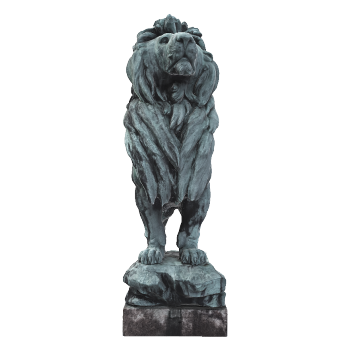
The statue is located on the Schmel Bridge, spanning the Danube Canal. The construction period of the bridge was from 1894 to 1899. Bridge designer Otto Wagner. Rudolf Weyr designed two lions on the bridge. The Schmel Bridge also serves as a dam, as part of the Nussdorf dam and lock system, regulating the flow of Danube water into the Danube Canal. Schmel Bridge is an important landmark in Vienna, renowned not only for its architectural aesthetics and functionality.
Statue of Queen Elizabeth of Hungary

Statue of Queen Elizabeth of Hungary

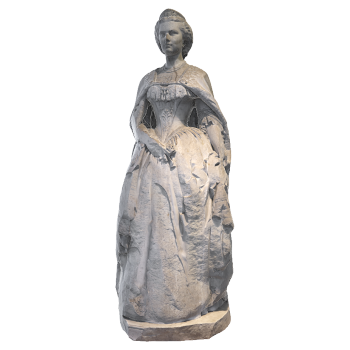
The statue is located at Vienna West Station. The creator is Hans Gassel. Created in 1860. In 1945, this statue was severely damaged. The statue was successfully restored in 1984. On December 15, 1858, with the opening of the "Royal Queen Elizabeth Railway" from Vienna West Station to Linz, the station was officially put into use. The new station hall opened in 1951. Queen Elizabeth, also known as Princess Sissy, was the queen of Austria and Hungary, and the daughter of Duke Maximilian Joseph of Bavaria and Princess Ludovica. She is renowned for her beauty, tragic life, and place in Austrian history.
Joseph Ressel Memorial

Joseph Ressel Memorial

This is the Joseph Reissel Memorial located in the eponymous park in the fourth district of Vienna. This monument displays a bronze statue of Reysol, located on a stepped pedestal. This monument was created by Anton Dominik Fernkorn in 1863 and unveiled on January 18, 1863. Joseph Ressel was one of the inventors of ship propellers, and together with John Erickson, Francis Pettit Smith, Robert Fulton, and David Bushnell, he brought it to a stage of technological maturity.
Monument to the Battle of Durnstein

Monument to the Battle of Durnstein

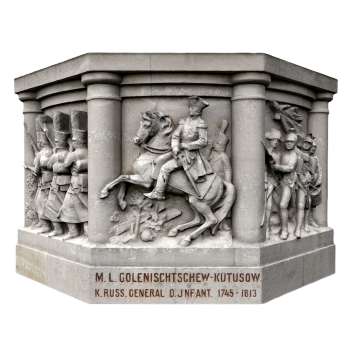
The Battle of Duinstein (also known as the Battle of Krems) occurred on November 11, 1805, as part of the Third Coalition War against France during the Napoleonic Wars. Austria's D ü nsten (modern-day D ü nsten) is located in the Wahau region of the Danube River Valley, approximately 73 kilometers (45 miles) upstream of Vienna, Austria. This battle took place on a flood plain between rivers and mountains.
The Austrian Fountain on Freion Square

The Austrian Fountain on Freion Square

The Austrian Fountain on Freion Square in Vienna's First District. This fountain was designed by Ludwig von Schwantaler, and the statue was made by the Royal Bavarian Ore Foundry in Munich under the guidance of Ferdinand Miller. This fountain was unveiled on October 16, 1846, consisting of a four-way basin made of Mathausen granite, a pillar surrounded by oak trees, allegorical figures symbolizing the four main rivers of the monarchy at the time (Danube, Po, Elbe, Vistula), and an Austrian statue draped in a star cloak, wearing a wall crown, holding a spear and shield.
Maria Rosalia Rita de Castro

Maria Rosalia Rita de Castro

Maria Rosalia Rita de Castro, better known as Rosalia de Castro, was a 19th-century Galician poet and novelist, considered one of the most important figures in 19th-century Spanish literature and modern lyric poetry. Her poetry works helped inspire the revival of Galician literary language. Rosalia de Castro's poetry is characterized by deep nostalgia, longing, and melancholy. Her poetry explores themes such as women's oppression, seeking liberation, and advocating for women's identity. Her poetry had a huge impact on the eve of the Portuguese Revolution in 1910.
The Seal

The Seal

Foca is a commemorative sculpture located at Aqu á rio Vasco da Gama Aquarium in Arges, Lisbon, Portugal. This aquarium is one of the oldest aquariums in the world, built in 1898 to commemorate the 400th anniversary of Vasco da Gama's discovery of the sea route to India. The construction of this aquarium began in December 1897 and ended in July 1898, led by two French master architects, Charles Viald and Fernand Tusette, who were then residing in Lisbon.
The owl statue at the National Library of Greece

The owl statue at the National Library of Greece

The National Library of Greece (Greek: Εθ νικήΒιβ λιοθ ήκη) was established in the first half of the 19th century and is located near the center of Athens. It was designed by Danish architect Theofel Hansen and is one of his neoclassical architectural trilogy (the other two being the Academy of Athens and the University of Athens). The National Library of Greece houses 4500 Greek manuscripts, making it one of the places with the most preserved Greek manuscripts. The museum also houses many documents and archives related to the Greek Revolution.
Monument to the Republic of Paris, 1879 National Square Monument

Monument to the Republic of Paris, 1879 National Square Monument

Ten years before the 100th anniversary of the French Revolution, the city of Paris launched a competition for the Honor Monument of the New Republic located in the east of Paris. The Morris brothers won the competition, and their Republic Monument is now located on Republic Square. But Jules Darrow's project attracted Paris city councilors, who commissioned him to make bronze for the current Place de la Nation. The victory of the Republic opened in 1899. As a fervent republican, Dalloway chose to provide impetus for his monument, leading humanity towards a new golden age.
The marble statue "Ugolino and His Sons" collected in the Rodin Museum in Paris

The marble statue "Ugolino and His Sons" collected in the Rodin Museum in Paris

Ugolino and his sons are Ugolino marble sculptures made by Jean Baptiste Carpeaux in Paris in the 1860s. It depicts the story of Ugolino in Dante's Inferno, where a 13th century Count is imprisoned and starving with his children. This work is known for its expressive details, which opened up Karbo's career. It is currently housed in the Rodin Museum in Paris.
Bronze Dragon Statue in Hue Royal City, Vietnam

Bronze Dragon Statue in Hue Royal City, Vietnam

The dragon of the inner city of Hue, Vietnam The bronze dragon was cast in 1842 and is located in front of the Yueshi Hall in Da Nei Fu, Hue City, Vietnam. The bronze dragon was cast in front of the Shunhua Imperial City in 1842.
The marble bow statue of the British fifth class frigate 'The Old Father Thames'

The marble bow statue of the British fifth class frigate 'The Old Father Thames'

The statue is a cultural relic dating back to 1823, which was a five class frigate with 46 guns built at Chatham Shipbuilding. The statue is a carefully carved marble male half body, depicting an angry river god and undoubtedly representing the spirit of the Thames River. The statue is known as the 'Old Father Thames' and was taken from the fifth class frigate HMS Thames (1823). The Thames River is an important river that serves as the main trade route to the busiest port in London. It is an important shipbuilding center with royal docks and numerous private companies, and the statue is now housed in the National Maritime Museum in London.
Plaster statue of the sculptor Joseph Ducacu, The Fall of Babylon

Plaster statue of the sculptor Joseph Ducacu, The Fall of Babylon

The Fall of Babylon is a work of art created in 1884 by Joseph Dukaju (1823-1891), now in the collection of the Royal Gallery in Brussels, Belgium. Babylon was an important city in the ancient Middle East, famous for its majestic walls and hanging gardens. However, the glory of Babylon did not last long. In 539 B. C., the Persian king, Serus II, captured Babylon, marking the end of the Neo-Babylonian Empire.
Rhinoceros Orsay Museum Collection

Rhinoceros Orsay Museum Collection

This is a cast-iron sculpture by Henri Alfred Jacquemart, made in 1878 for the Universal Exhibition in Paris, now located outside the Musée d'Orsay. The sculpture is very realistic and shows the image and power of an Indian rhinoceros.